


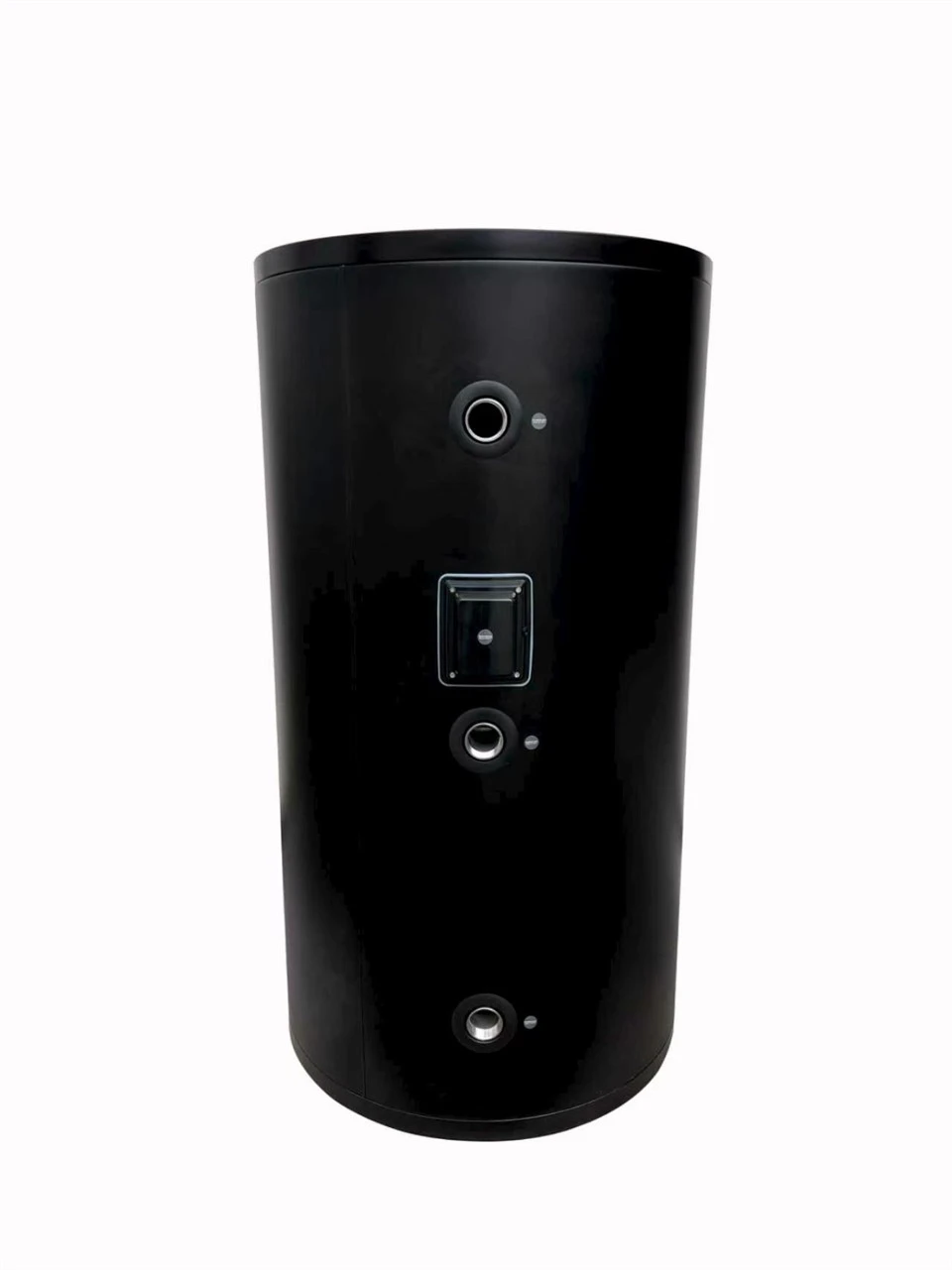
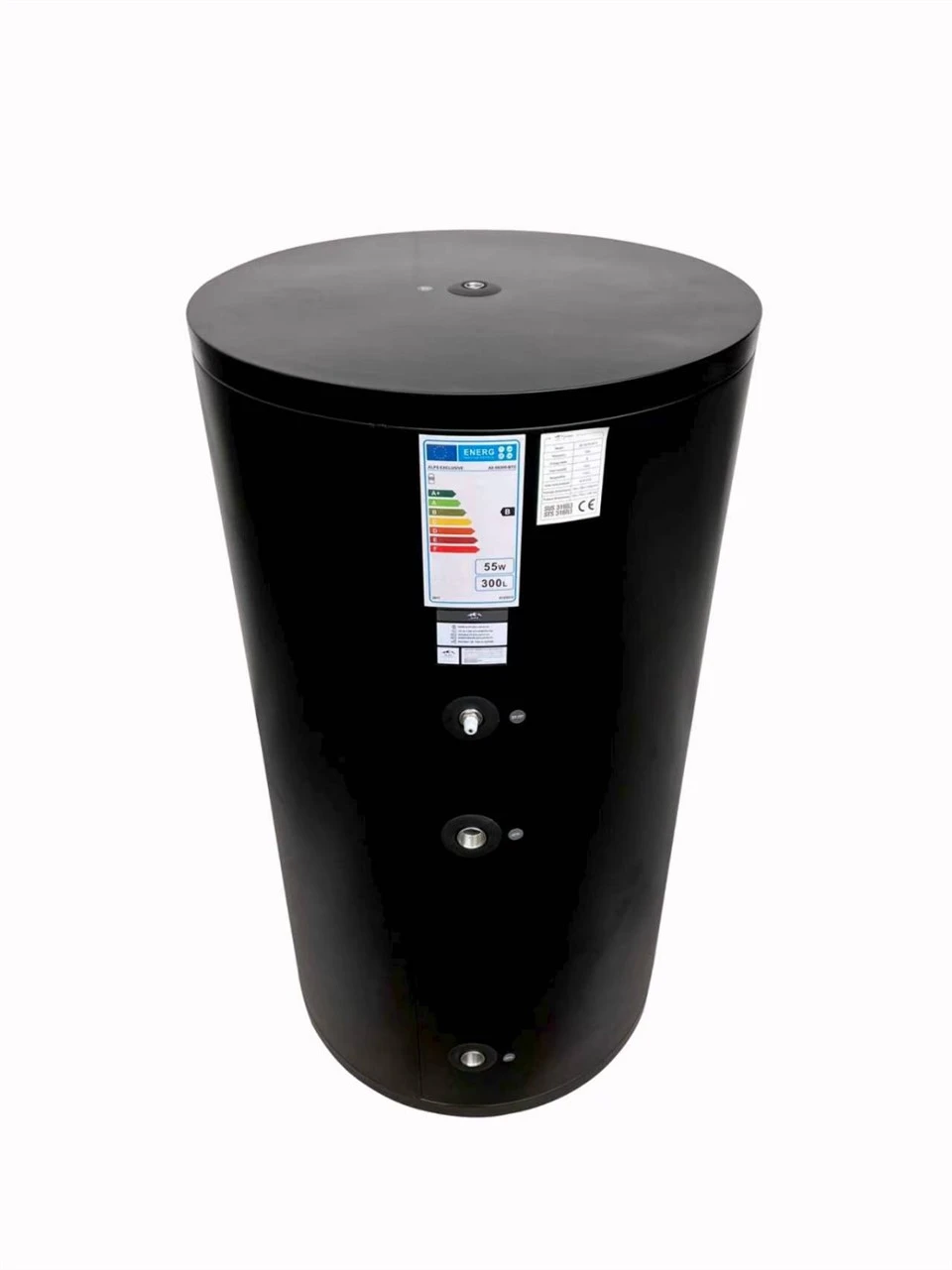
BUFFER TANK
buffer tank is essentially a thermal energy storage tank that acts like a large water battery for heating and cooling systems. Its main purpose is to add water volume to a system, which stabilizes temperatures and prevents equipment from rapidly cycling on and off, a problem known as "short-cycling".
Available models: 50Liter 80Liter 100Liter 150Liter 200Liter 300Liter 500Liter
Optional materials: SUS304-2B SUS316 SUS2205
Certificates: ERP The Water Directive PED report

1.Core Functions
Prevents Short-Cycling: In systems with low water volume, the heating or cooling reaches its target temperature quickly, causing the boiler or chiller to shut off and turn back on too frequently. A buffer tank adds volume, meaning it takes longer to reach the set temperature. This reduces the number of compressor or burner starts, saving energy and reducing wear on the equipment.
Improves Temperature Control: By adding "inertia" to the system, the buffer tank helps maintain a more stable and precise leaving water temperature.
Hydraulic Separation: In hydronic (water-based) heating systems, a buffer tank can act as a hydraulic separator. This allows the boiler loop and the heating system loops to operate independently with different flow rates, ensuring the boiler always gets the minimum flow it needs to function correctly.
"Parking" Energy: In heating applications, a buffer tank can "park" excess BTUs (a unit of heat) produced by the boiler. This stored heat can then be used to satisfy a heating demand later without needing to fire up the boiler again, which improves efficiency

2.Common Applications
You'll find buffer tanks used in several different industries:
HVAC (Heating, Ventilation, and Air Conditioning): This is the most common use, often paired with chillers for cooling (chilled water buffer tanks) or with boilers for heating.
Oil & Gas Drilling: Here, a buffer tank is a specific piece of equipment used to change the direction of fluid flow after a choke, directing it to a flare line.
Aquaculture: In fish farming, buffer tanks serve as intermediate reservoirs to regulate and secure the water supply, stabilizing flow rates and compensating for fluctuations.
Wastewater Treatment: These tanks are used to equalize the volume and quality of incoming wastewater, smoothing out peaks in flow or contamination to protect downstream treatment processes.
3.Types and Design Details
Design: While they can be horizontal, vertical buffer tanks are common as they promote "stratification," where water naturally separates into distinct temperature layers (hotter water at the top, cooler at the bottom). This is beneficial for efficient system operation.
Features: Many tanks include features like:
Internal Baffles: To prevent mixing and promote stratification (though some, like those from Trane, may not have them).
Insulation: To minimize energy loss.
Hot Tags: buffer tank, China buffer tank suppliers, manufacturers, factory
Previous
No InformationNext
No InformationYou Might Also Like


Send Inquiry